
 English
 Français
 Español
Depuis sa création en 2002, Zhangjiagang SMK MFG. Co., Ltd. a spécialisé dans les produits de sécurisation et de contrôle de fret, avec plus 20 ans d'expérience en R&D et en exportation mondiale. L'entreprise est un fabricant en Chine de Sangles de bateau et une Fournisseurs personnalisés de Sangles de bateau, et exploite trois usines ainsi qu'un centre d'entrepôt à grande échelle, formant un réseau d'approvisionnement international efficace.
La gamme de produits de SMK comprend des sangles d'attachement, des cordons élastiques, des sangles de remorquage, des élingues de levage, des palans et des accessoires 4x4, largement utilisés dans les secteurs de transport, de logistique, de plein air et industriel. Sa marque interne XStrap jouit d'une forte reconnaissance sur les marchés mondiaux, aux côtés de flexible Services OEM / ODM pour les besoins personnalisés.
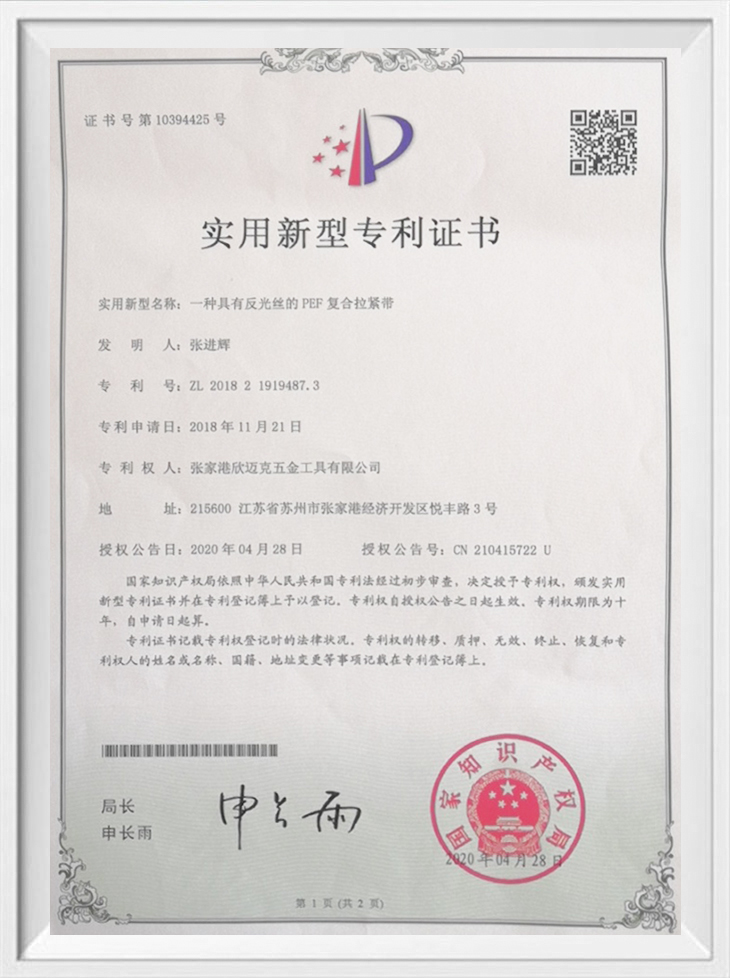
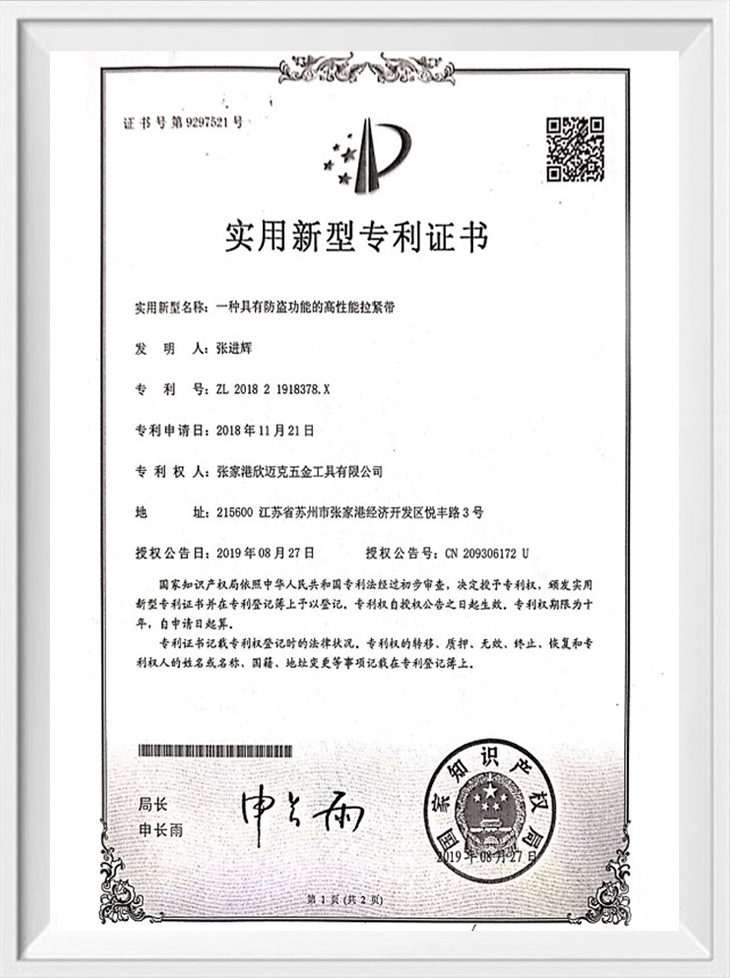
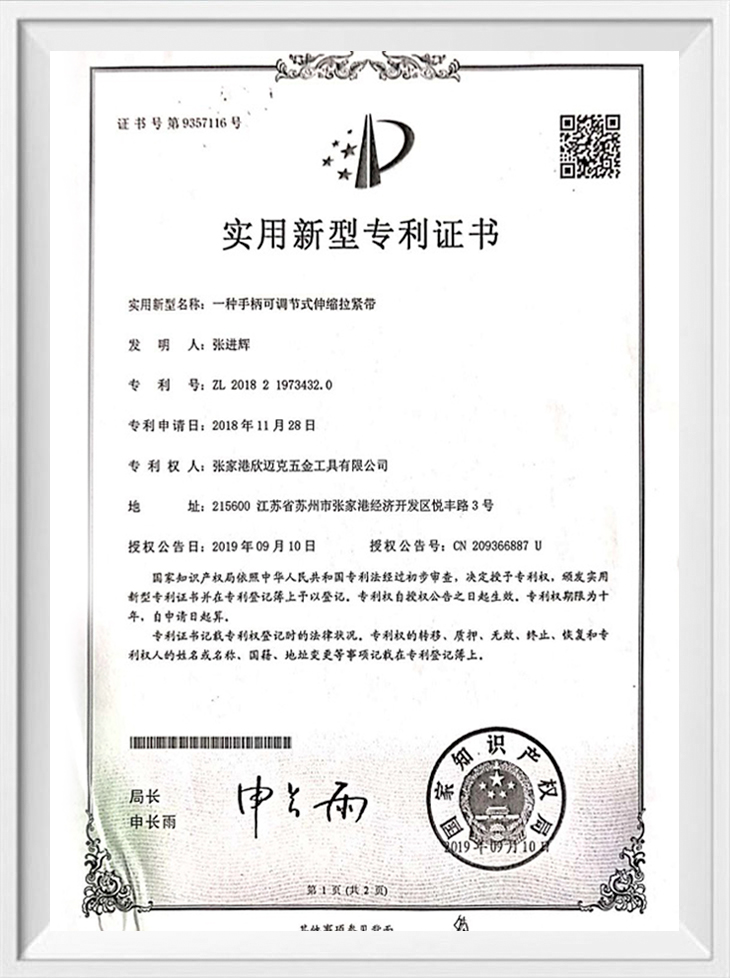
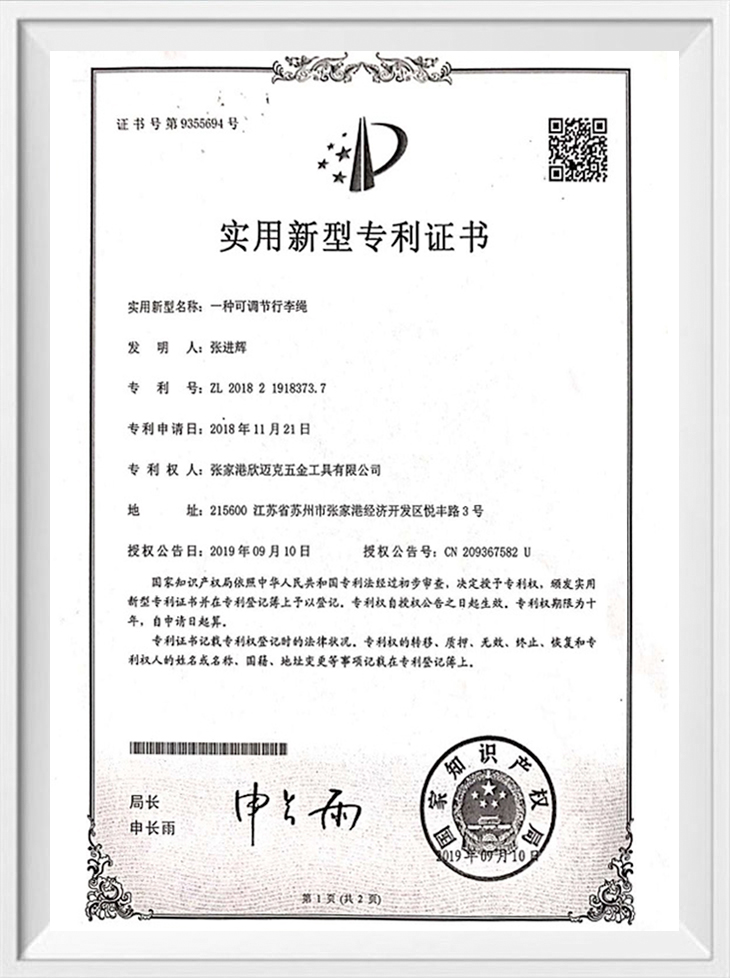
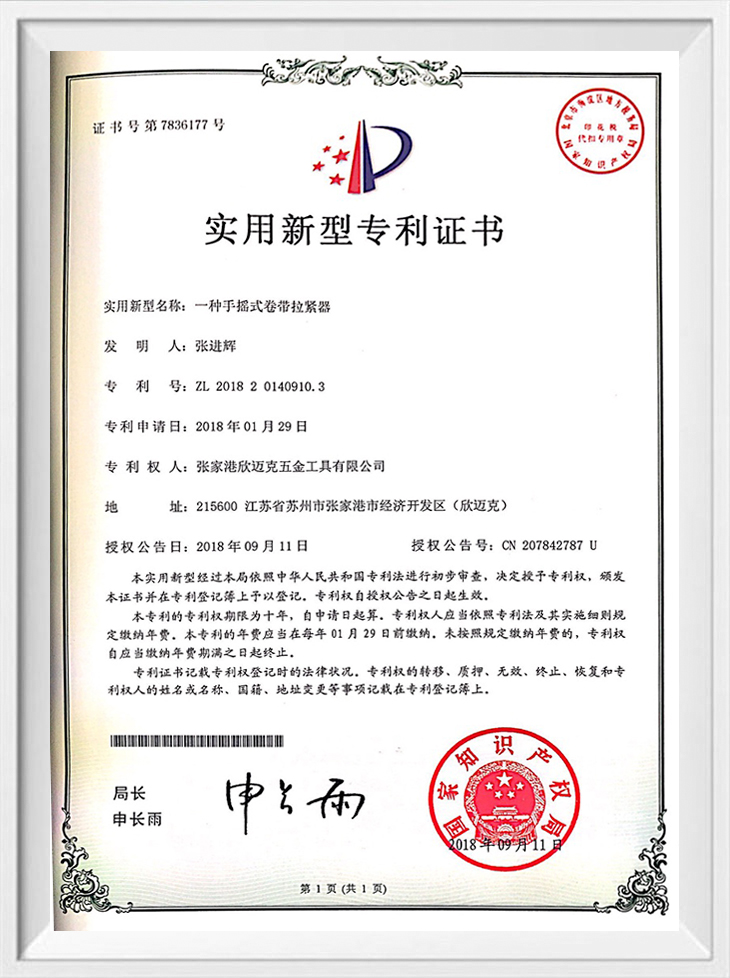
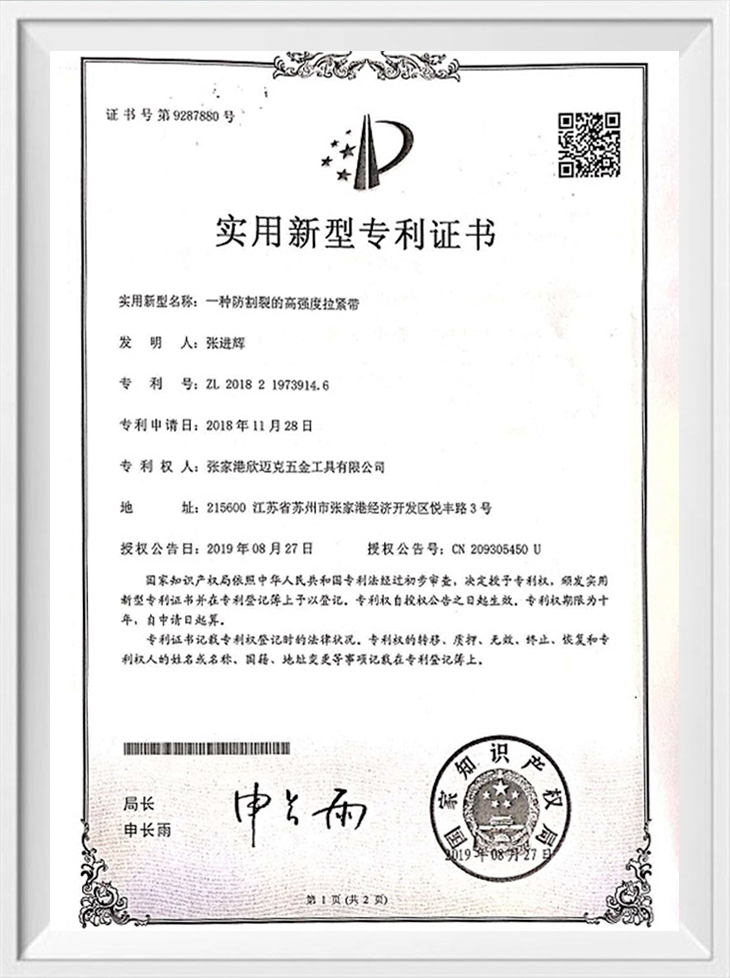
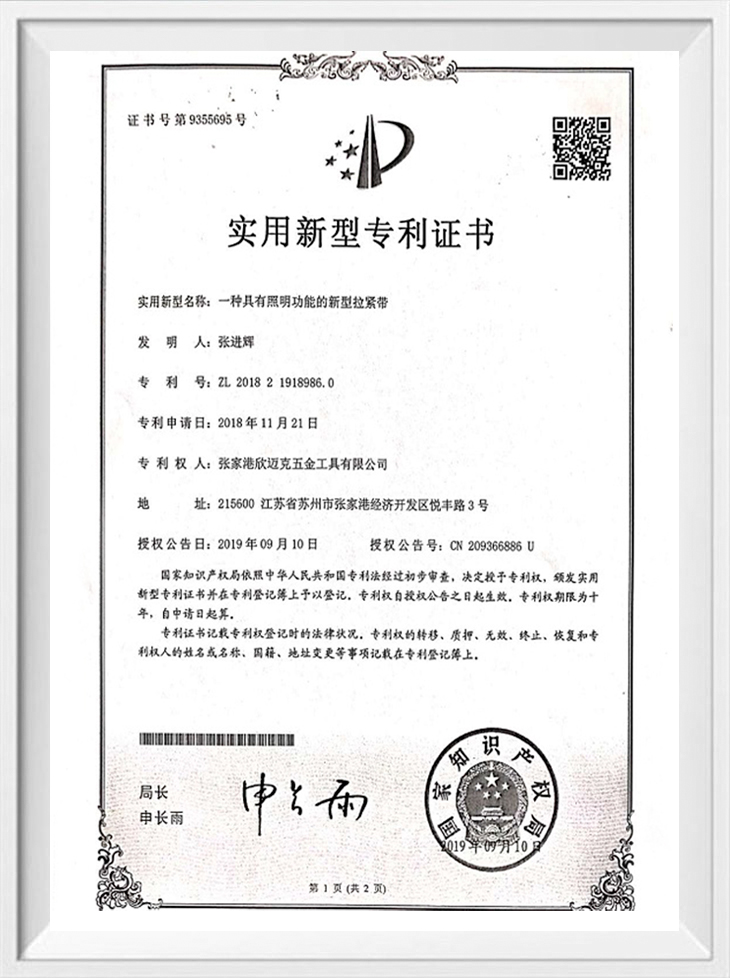
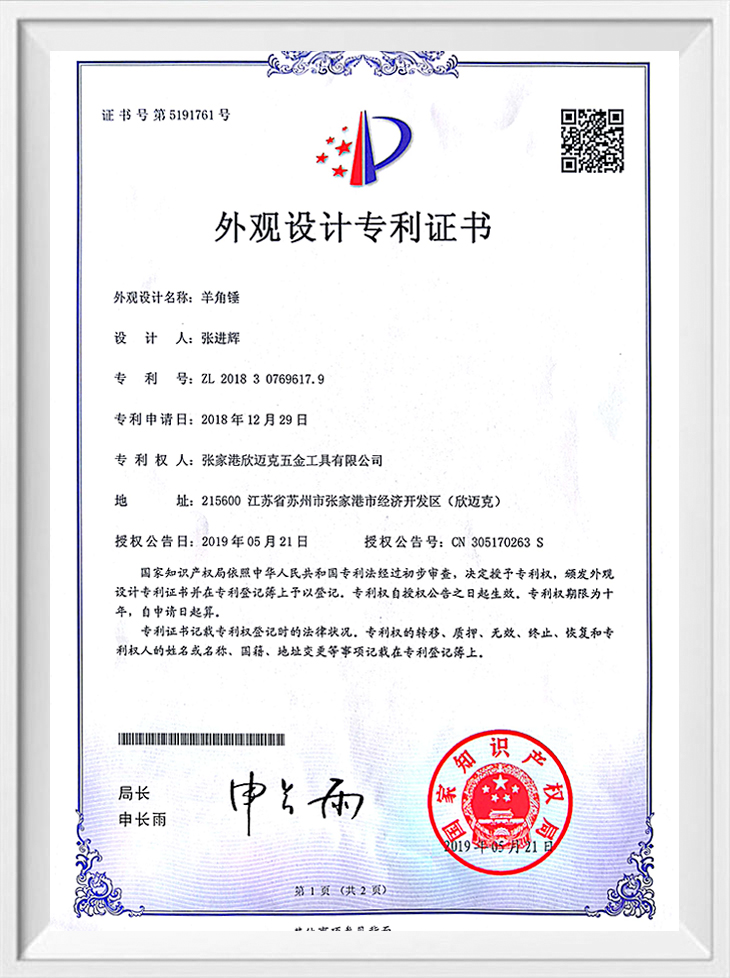
Avec plus de 8 000 m² d'espace de production, SMK est équipé de lignes automatisées avancées et de laboratoires de tests internes, assurant un contrôle de qualité complet des matières premières aux produits finis. La société est certifiée ISO 9001, Smeta audité et a passé des inspections antiterroristes C-TPAT et plusieurs certifications GS et brevets.
Pour l'avenir, SMK continuera de mettre à niveau ses systèmes de contrôle des cargaisons, de rester proches des besoins des clients et de fournir des produits et services efficaces de haute qualité dans le monde.
Produit
-
Nouveaux produits
- Solutions de plateau lisse
- Solutions pour l'intérieur de fourgon
-
Cordon d'arrimage et élastique polyvalent
-
Promotion d'arrimage à cliquet
-
Arrimage industriel
-
Arrimage de moto industrielle
-
Attache industrielle pour VTT UTV
-
Arrimage industriel en acier inoxydable
-
Attache de tente industrielle
-
Sangles de bateau
-
Sangle De Fixation À Cliquet À Charge Légère
-
Sangle De Fixation À Cliquet À Charge Standard
-
Sangle De Fixation À Cliquet À Charge Lourde
-
Sangle De Fixation À Cliquet À Charge Extra-Lourde
-
Cordon élastique
-
Promotion d'arrimage à cliquet
-
Solutions de transport et de remorquage de véhicules
-
Sangles De Transport De Véhicules
-
Sangles d'arrimage de voiture
-
Sangle de rechange pour arrimage de voiture
-
Sangles de panier de chariot de remorquage
-
Filets de roue
-
Sangles de récupération
-
Sangles et cordes de remorquage
-
Sangle de remorquage à cliquet et sangle de remorquage V Bridle
-
Extracteur et accessoires de remorquage Come Along
-
Sangles De Transport De Véhicules
-
Sangle
- Matériel d'arrimage
-
Attache et cordon élastique certifiés TUV&GS
-
Remorquage et gréement
-
4×4 tout-terrain et remorques
contact
Vente en gros et fabrication de Sangles de bateau de qualité grand public
Informations à mettre à jour
Profil de l'entreprise
Zhangjiagang SMK MFG. Co., Ltd.
Nouvelles
-
Face à la demande toujours croissante du marché, Xstrap Company a toujours maintenu un rythme d'expédition très efficace, garantissant les besoins des clients ave...
EN SAVOIR PLUS -
CCBEC(China (Shenzhen) Cross-Border E-Commerce Fair) is currently one of the largest and most influential professional exhibitions in the field of cross-border e-co...
EN SAVOIR PLUS -
Verified Supplier is the highest level membership on Alibaba.com. The platform conducts comprehensive verification—through both online document review and on-site f...
EN SAVOIR PLUS
Certificat d'honneur
Connaissances de l'industrie de Sangles de bateau
Pourquoi les sangles de bateau sont le fondement de la sécurité maritime
Dans le domaine des sports nautiques modernes et du transport par bateau, assurer la stabilité absolue d'un navire pendant le transit terrestre est la tâche principale de tout propriétaire de bateau. Sangles de bateau sont bien plus que de simples outils de connexion ; ils sont l'aboutissement d'une expérience en mécanique physique et en sécurité maritime. Zhangjiagang SMK MFG. Co., Ltd. , avec plus de 20 ans d'expérience en R&D, comprend que lors du transport d'un bateau sur des autoroutes à grande vitesse ou des routes de montagne accidentées, la coque génère une immense énergie cinétique due à l'inertie. Sans haute qualité Sangles de bateau pour assurer la retenue, cette énergie peut se traduire par un déplacement mortel et une panne catastrophique de l'équipement. La dynamique d'un bateau assis sur une remorque est complexe. Contrairement aux marchandises statiques dans un entrepôt, un bateau sur une remorque est soumis à des forces multidirectionnelles, notamment la force centrifuge lors des virages, les forces G verticales lorsqu'il heurte des bosses et les forces longitudinales lors d'un freinage brusque. Professionnel Sangles de bateau sont conçus spécifiquement pour gérer ces modèles de stress spécifiques.
Analyse de mécanique physique
D'un point de vue mécanique, le rôle principal de Sangles de bateau est de contrecarrer le déplacement vertical, le glissement horizontal et les rebonds causés par des surfaces routières inégales. Lorsqu'une remorque passe sur des ralentisseurs ou des nids-de-poule, le poids du bateau crée un impact instantané sur le berceau. Sangles de bateau doit posséder un allongement extrêmement faible pour garantir que cette force d'impact est absorbée uniformément sans causer de dommages structurels à la coque. Haute qualité Sangles de bateau agissent comme une extension du châssis de la remorque, « soudant » efficacement le bateau à la plate-forme de transport par tension. Cette tension doit être constante ; toute oscillation de la tension de la sangle pendant le transport peut entraîner une fatigue du matériau. Zhangjiagang SMK MFG. Co., Ltd. utilise des techniques de tissage avancées pour garantir que la structure moléculaire de la sangle reste stable sous des cycles de contraintes élevées, offrant ainsi une marge de sécurité fiable pour le transport longue distance.
Prévention des risques
En tant qu'expert mondial de premier plan en matière d'arrimage et de contrôle des marchandises, Zhangjiagang SMK MFG. Co., Ltd. conçoit son Sangles de bateau pour répondre aux normes juridiques et de sécurité les plus strictes. Dans de nombreuses régions d'Amérique du Nord et d'Europe, la loi exige explicitement que les bateaux transportés sur la voie publique soient équipés de Sangles de bateau qui répondent aux exigences de charge nominale. Négliger cette étape entraîne non seulement de lourdes amendes, mais entraîne également des complications en matière d'assurance, car les prestataires refusent souvent les réclamations si Sangles de bateau n’ont pas été utilisés correctement. Au-delà des aspects juridiques, le risque de « coque marche », c'est-à-dire que le bateau se déplace progressivement sur les rouleaux de la remorque, est une préoccupation majeure. Sans la poigne spécialisée de Sangles de bateau , un bateau peut déplacer son centre de gravité, provoquant un balancement incontrôlable de la remorque à grande vitesse, un phénomène connu sous le nom d'oscillation de vitesse. Correctement appliqué Sangles de bateau éliminez ce risque en maintenant l'alignement précis du navire sur le système de support de la remorque.
Exigences juridiques et d'assurance
De plus, la fiabilité de Sangles de bateau affecte directement la durée de vie à long terme du navire. Un équipement de fixation de qualité inférieure peut créer de fortes frictions aux points de contact, alors qu'un équipement professionnel Sangles de bateau utilisez des conceptions de tension scientifiquement réparties pour protéger l’intégrité extérieure des coques en fibre de verre ou en aluminium. Le laboratoire interne de Zhangjiagang SMK MFG. Co., Ltd. effectue des tests de traction rigoureux sur chaque modèle de Sangles de bateau pour garantir des performances constantes dans des environnements extrêmes. Pour les transporteurs commerciaux et les concessionnaires de bateaux professionnels, utilisant des Sangles de bateau est une question de responsabilité professionnelle. Documentation sur l'utilisation d'équipements certifiés ISO de Zhangjiagang SMK MFG. Co., Ltd. peut être un facteur décisif dans les audits de sécurité et les négociations des primes d’assurance. En investissant dans des produits de haute qualité Sangles de bateau , les opérateurs protègent non seulement le bateau mais aussi la vie des autres usagers de la route.
Analyse approfondie : différents types de sangles pour bateaux et leurs applications
Pour s'adapter à différentes tailles de bateaux et à divers besoins de transport, Sangles de bateau sont classés en plusieurs types spécialisés. Sur les lignes de production automatisées de ses trois usines, Zhangjiagang SMK MFG. Co., Ltd. a développé une large gamme de Sangles de bateau Spécifications pour répondre aux besoins personnalisés des clients OEM/ODM mondiaux. Chaque type de sangle est conçu pour répondre à un défi géométrique spécifique présenté par différents modèles de coque, des bateaux à fond plat aux bateaux de course au large en V profond.
Sangles de tableau arrière
Ces Sangles de bateau sont généralement utilisés par paires et installés des deux côtés de la poupe, fixant la coque directement au châssis de la remorque. Ce sont les composants essentiels qui empêchent le bateau de se balancer d’un côté à l’autre ou de rebondir de haut en bas pendant le transport. Sangles de tableau arrière supportent la majeure partie du poids arrière et sont essentiels pour empêcher le bateau de glisser vers l'arrière de la remorque lors de lancements sur rampe raide ou d'accélérations soudaines. Zhangjiagang SMK MFG. Co., Ltd. propose ces Sangles de bateau dans les versions manuelles et rétractables, garantissant que même les moteurs hors-bord les plus lourds restent stabilisés contre le tableau arrière.
Sangles de plat-bord
Pour les bateaux de petite à moyenne taille sans points d'accrochage fixes, ces Sangles de bateau enveloppez tout le pont. Leur avantage réside dans la grande surface de contact, qui supprime efficacement le mouvement de saut global du navire. Lors de l'utilisation Sangles de plat-bord , il est essentiel d'avoir un mécanisme de tension fluide pour éviter une pression inégale sur les côtés de la coque. Zhangjiagang SMK MFG. Co., Ltd. intègre des poignées souples et des manchons de protection dans ces Sangles de bateau pour garantir que la haute tension nécessaire pour maintenir le bateau au sol n'endommage pas la garniture du plat-bord ou le gelcoat.
Sangles d'arrimage à nœud
De nombreux propriétaires de bateaux croient à tort que le câble du treuil suffit à lui seul à sécuriser l'étrave. En réalité, professionnel Sangles de bateau servir de deuxième ligne de défense essentielle, empêchant l’arc de bondir vers l’avant en cas de défaillance du mécanisme du treuil. Lors d'une collision ou d'un arrêt soudain, le poteau du treuil peut se plier ou le câble peut se casser ; un secondaire monté sur l'arc Sangle de bateau fournit la redondance nécessaire pour empêcher le bateau de s'écraser sur le véhicule remorqueur. Zhangjiagang SMK MFG. Co., Ltd. met l'accent sur l'utilisation de véhicules lourds Sangles de bateau à la proue pour contrer ces forces à forte impulsion.
Sangles à cliquet ou à boucle
Une comparaison des avantages mécaniques, de la facilité d'utilisation et de la durabilité du type à cliquet et à boucle Sangles de bateau est essentiel pour choisir le bon équipement :
| Mesure de performances | Sangles de bateau à cliquet | Sangles de bateau à boucle à came |
| Principe mécanique | Utilise un engrenage et un levier pour une tension élevée | Repose sur la pression du ressort et la friction |
| Charge maximale (WLL) | Très haut, adapté aux bateaux lourds | Moyen, adapté aux kayaks/canoës |
| Complexité opérationnelle | Nécessite un cliquet manuel | Tirer pour serrer d'une seule main |
| Sécurité | Doté d'un verrouillage automatique et d'une haute résistance aux vibrations | Idéal pour les trajets courts ou les charges légères |
| Scénario recommandé | Routes inter-États longue distance et difficiles | Transport urbain sur de courtes distances |
Zhangjiagang SMK MFG. Co., Ltd. fabrique ces Sangles de bateau en stricte conformité avec les systèmes de gestion de la qualité ISO 9001. Que ce soit sous la marque XSTRAP ou sous forme de produits personnalisés, l'entreprise s'assure que les mécanismes à cliquet de tous Sangles de bateau subissent un revêtement anticorrosion pour résister aux environnements humides des quais et à l’exposition aux sels de déneigement corrosifs pendant le transport hivernal.
Science des matériaux : facteurs fondamentaux déterminant la durée de vie des sangles de bateau
Au moment de choisir Sangles de bateau , la structure fibreuse et la composition métallique sous la surface déterminent si la sangle fournit un support solide ou si elle tombe en panne à un moment critique. Zhangjiagang SMK MFG. Co., Ltd. utilise ses installations de production avancées de 8 000 m² pour maintenir des normes strictes concernant les matières premières utilisées dans Sangles de bateau . La chimie des fibres et la métallurgie du matériel sont les domaines où une véritable sécurité est conçue.
Avantages techniques du polyester
En milieu maritime, Sangles de bateau doit faire face à une humidité élevée, une teneur élevée en sel et un rayonnement UV intense. Bien que le nylon et le polypropylène soient également utilisés dans les sangles, l'équipe R&D de Zhangjiagang SMK MFG. Co., Ltd. insiste sur l'utilisation de 100 % de polyester haute ténacité pour des produits haut de gamme Sangles de bateau . La résistance inhérente du polyester aux hydrocarbures et aux huiles signifie également que les déversements accidentels de carburant ou d'huile sur le quai ne compromettront pas l'intégrité du Sangles de bateau .
Extensibilité ultra faible : La fibre de polyester a un allongement sous charge bien inférieur à celui du nylon. Pour Sangles de bateau , cela signifie qu'une fois serré, le bateau reste en place et ne se desserrera pas à cause de l'étirement des fibres lors de voyages longue distance. Zhangjiagang SMK MFG. Co., Ltd. garantit que le facteur d'étirement est maintenu en dessous de 3 % à la capacité nominale.
Résistance aux UV : Les bateaux sont constamment exposés au soleil. Sangles de bateau produit par Zhangjiagang SMK MFG. Co., Ltd. subir une stabilisation UV spécialisée pour éviter la fragilité causée par la photodégradation.
Hydrofuge : Contrairement aux matériaux qui perdent de leur résistance lorsqu'ils sont mouillés, le polyester Sangles de bateau maintenir une résistance mécanique à 100 % dans des conditions humides et sécher très rapidement, empêchant ainsi la croissance de moisissures.
Résistance à la rupture et limite de charge de travail (WLL)
Comprendre les valeurs sur Sangles de bateau les étiquettes sont une condition préalable à un transport sûr. Le laboratoire interne de Zhangjiagang SMK MFG. Co., Ltd. effectue des tests destructifs sur chaque lot selon les normes ISO 9001. La résistance à la rupture est le point de rupture totale, tandis que la CMU est le poids maximum que peut supporter Sangles de bateau devrait régulièrement manipuler. Généralement, le facteur de sécurité pour Sangles de bateau est fixé à 3:1. Cela signifie que si un Sangle de bateau a une résistance à la rupture de 3 000 lb, sa limite de charge de travail nominale (WLL) doit être de 1 000 lb. Zhangjiagang SMK MFG. Co., Ltd. marque clairement ces notes sur chaque produit pour garantir que les utilisateurs peuvent prendre des décisions de sécurité éclairées.
Métallurgie de la quincaillerie : résistance à la corrosion au brouillard salin
Les composants métalliques de Sangles de bateau (cliquets, crochets, boucles) sont les points faibles potentiels du système. Zhangjiagang SMK MFG. Co., Ltd. fournit diverses solutions de revêtement pour différents environnements aquatiques. Les pièces métalliques de la marque XSTRAP doivent passer des centaines d'heures de tests au brouillard salin pour garantir qu'elles ne s'oxydent pas ou ne rouillent pas, ce qui pourrait entraîner une défaillance du mécanisme de verrouillage. Dans les environnements d’eau salée, le zingage standard est insuffisant ; donc, Zhangjiagang SMK MFG. Co., Ltd. propose des options d'acier inoxydable et de revêtement électronique pour leur qualité supérieure Sangles de bateau lignes.
| Paramètre | Sangles de bateau standard | Sangles de bateau robustes | Sangles de bateau côtières haut de gamme |
| Matériau de la sangle | Polyester standard | Polyester haute densité | Revêtement spécial anti-UV |
| Revêtement de matériel | Zinc clair | Zinc jaune | Acier inoxydable 304/316 |
| Charge de travail (WLL) | 500 à 1 200 livres | 1 500 à 3 300 livres | 2 000 à 5 000 livres |
| Évaluation du brouillard salin | 48 heures | 96 à 120 heures | 240 heures |
Artisanat de couture : le secret de la répartition du stress
Les lignes de couture automatisées de Zhangjiagang SMK MFG. Co., Ltd. utiliser des coutures en boîte contrôlées par ordinateur. Ce processus garantit que lorsque le Sangles de bateau sont sous tension, la contrainte est répartie uniformément sur chaque ligne de fibre plutôt que de se concentrer sur un seul point, ce qui améliore considérablement la durée de vie du système en fatigue. Le fil utilisé est également en polyester haute ténacité, garantissant que la couture est aussi solide que la sangle elle-même. Chaque Sangle de bateau subit une inspection visuelle et mécanique pour vérifier l’intégrité des points avant de quitter l’usine.
Instructions d'expert : Comment installer des sangles de bateau pour une stabilité maximale
Même Sangles de bateau avec les paramètres WLL les plus élevés ne peuvent pas fournir une protection adéquate s’ils sont mal installés. Zhangjiagang SMK MFG. Co., Ltd. a résumé un processus d'installation standard basé sur plus de 20 ans d'expérience en matière de contrôle du fret pour aider les utilisateurs à obtenir à chaque fois une arrimage de qualité professionnelle.
Identifier les points d'ancrage physiques
Avant d'utiliser Sangles de bateau , il faut repérer les pièces renforcées sur le châssis de la remorque et la coque du bateau. Il est strictement interdit de pendre Sangles de bateau sur des garde-corps en acier inoxydable, des taquets ou des fixations en plastique, car ceux-ci sont conçus pour l'amarrage et non pour les forces G élevées du transport routier. Les œillets de tableau arrière à l'arrière sont recommandés car ils sont directement connectés au renfort structurel de la coque. Zhangjiagang SMK MFG. Co., Ltd. suggère de vérifier ces points pour déceler tout signe de contrainte ou de corrosion avant de fixer le Sangles de bateau .
Éliminer les risques de friction
Lors du transport longue distance, Sangles de bateau vibre légèrement en raison du flux d'air, un phénomène connu sous le nom de « bourdonnement de la sangle ». Sans protection, cette vibration à haute fréquence peut agir comme du papier de verre, usant la peinture ou le gelcoat du bateau en quelques heures. Zhangjiagang SMK MFG. Co., Ltd. recommande d'utiliser des coussinets de protection ou des manchons en feutre à tous les points de contact. De plus, en veillant à ce que le Sangles de bateau ne pas traverser les bords métalliques tranchants de la remorque pour éviter que la sangle ne soit coupée sous tension.
La règle de serrage en trois étapes
Pré-tension : Tirez manuellement sur l'excédent de sangle du Sangles de bateau à travers la boucle ou le cliquet pour garantir que les crochets sont bien en place et qu'il n'y a pas de jeu dans le système.
Verrouillage à cliquet : Actionnez le cliquet à couple élevé conçu par Zhangjiagang SMK MFG. Co., Ltd. Habituellement, 3 à 4 clics sur la poignée une fois la sangle serrée à la main suffisent pour atteindre une tension idéale. Écoutez l'engagement solide des cliquets.
Inspection secondaire : Les vibrations de la route amènent souvent le bateau à s'enfoncer plus profondément dans les couchettes de la remorque. Après avoir conduit pendant environ 15 à 20 minutes, vous devez vous arrêter pour vérifier le Sangles de bateau et ajoutez un clic supplémentaire au cliquet si nécessaire.
Défis environnementaux et entretien professionnel des sangles de bateau
Dans les applications maritimes à long terme, les ennemis de Sangles de bateau ne sont pas seulement la gravité, mais aussi l’érosion naturelle omniprésente. Zhangjiagang SMK MFG. Co., Ltd. mène des recherches approfondies sur le terrain pour comprendre comment les différents climats affectent la longévité des Sangles de bateau , de l’humidité tropicale de l’Asie du Sud-Est aux hivers glacials de l’Europe du Nord.
Cristallisation du sel et usure des fibres
Quand Sangles de bateau sont exposés à l’eau de mer, l’évaporation de l’eau laisse de minuscules cristaux de sel. Ces cristaux extrêmement durs agissent comme des millions de micro-scies coupant les fibres pendant le transport. Au fil du temps, cela conduit à un aspect « flou » de la sangle, signe d’un affaiblissement structurel. Zhangjiagang SMK MFG. Co., Ltd. conseille aux utilisateurs de bien rincer Sangles de bateau avec de l'eau douce après chaque utilisation dans de l'eau salée pour dissoudre ces cristaux et préserver l'intégrité des fibres.
Protection profonde contre la dégradation UV
Les rayons ultraviolets provoquent des réactions photochimiques qui brisent les chaînes polymères, un processus connu sous le nom de « farinage ». Tests par Zhangjiagang SMK MFG. Co., Ltd. prouver que leur stabilisé aux UV Sangles de bateau conservent plus de 90 % de leur résistance initiale même après une exposition prolongée. Toutefois, pour une durée de vie maximale, il est recommandé de stocker Sangles de bateau dans un endroit sombre et sec lorsqu'il n'est pas utilisé. Évitez de partir Sangles de bateau tendu sur la remorque au soleil pendant des mois, car cela combine le stress UV et la charge mécanique.
Lubrification et entretien du matériel
La douceur du mécanisme à cliquet affecte directement l'efficacité de la pré-tension de Sangles de bateau . Le sable et le sel peuvent bloquer les cliquets à ressort. Zhangjiagang SMK MFG. Co., Ltd. recommande d'utiliser un spray de silicone sec pour la lubrification. Évitez les huiles ou graisses lourdes, car elles attirent la saleté de la route qui peut user les engrenages internes du Sangles de bateau . Une poignée à cliquet bien entretenue doit bouger librement et s’enclencher avec un son clair et métallique.
Erreurs courantes : éviter les pièges liés à l'utilisation des sangles de bateau
Ignorer le piège Slack : De nombreux utilisateurs repartent immédiatement après avoir serré leur Sangles de bateau sans les revérifier à mi-parcours. Les premières bosses de la route surviennent lorsque le bateau trouve sa position finale de « nidification », desserrant souvent les sangles.
Torsion de la sangle : Une sangle tordue à 180 degrés peut perdre environ 25 à 30 % de sa résistance à la rupture. Assurez-vous toujours que Sangles de bateau poser à plat contre la coque et la remorque.
Un serrage excessif : C’est une idée fausse que de dire que plus serré est toujours plus sûr. Surcompression à l'aide des cliquets à fort effet de levier de Zhangjiagang SMK MFG. Co., Ltd. peut provoquer des fissures de contrainte dans les coques en fibre de verre ou plier les traverses de remorque. Le but est d’éliminer les mouvements et non d’écraser la coque.
FAQ
Q1 : Pourquoi les sangles de bateau sont-elles supérieures aux sangles de chargement ordinaires ?
Sangles de bateau sont spécifiquement optimisés pour les milieux aquatiques. Les sangles ordinaires peuvent utiliser du nylon, qui perd de sa résistance et s'étire excessivement lorsqu'il est mouillé. Le polyester Sangles de bateau produit par Zhangjiagang SMK MFG. Co., Ltd. offrent une excellente déperlance et une excellente stabilité dimensionnelle. De plus, Sangles de bateau comportent généralement des crochets recouverts de vinyle pour éviter de rayer la finition du bateau, une caractéristique rarement trouvée sur les sangles de chargement industrielles.
Q2 : Comment puis-je déterminer le nombre de sangles de bateau dont j'ai besoin en fonction de la WLL ?
La formule de base est que la limite de charge de travail totale (WLL) de tous Sangles de bateau doit être égal à au moins 1,5 fois le poids du bateau pour tenir compte des forces G dynamiques. Zhangjiagang SMK MFG. Co., Ltd. suggère une configuration minimale de « 1 Bow 2 Transom » pour tout bateau de plus de 14 pieds. Pour les plus grands navires offshore, milieu de navire supplémentaire Sangles de bateau peut être nécessaire pour empêcher le déplacement latéral.
Q3 : À quelles températures les sangles de bateau SMK peuvent-elles résister ?
Notre sangle en polyester conserve des propriétés physiques stables dans une plage de -40 à 120 degrés Celsius. Cela garantit que, que vous transportiez un bateau dans la chaleur du désert ou que vous le stockiez dans des conditions hivernales inférieures à zéro, le Sangles de bateau de Zhangjiagang SMK MFG. Co., Ltd. ne deviendra pas cassant et ne perdra pas sa capacité à retenir la tension.
| Caractéristique | Polyester (SMK recommandé) | Nylon | Polypropylène |
| Perte de force lorsqu'il est mouillé | Négligeable (<0,5%) | 10 % à 15 % de perte | Aucun changement |
| Allongement | Faible (<3%) | Élevé (>15 %) | Moyen |
| Stabilité aux UV | Excellent | Pauvre | Bon |
| Demande principale | Sangles de bateau haut de gamme | Cordes de remorquage | Sangles économiques |
Q4 : À quelle fréquence dois-je remplacer mes sangles de bateau ? Zhangjiagang SMK MFG. Co., Ltd.
recommande une inspection approfondie chaque saison. Si vous remarquez un effilochage, des coupures plus profondes que 10 % de la largeur de la sangle, ou si la quincaillerie métallique présente une corrosion par piqûres importante, il est temps de remplacer la sangle. Sangles de bateau . La sécurité ne vaut jamais le risque qu'une vieille sangle tombe en panne à vitesse d'autoroute.
-
 + 86-18112697781qindan355@gmail.comNo. 21, Rue Yuefeng, Ville de Yangshe, Ville de Zhangjiagang, Ville de Suzhou, Province du Jiangsu
 -
Liens Rapides
Réseaux Sociaux
Produit
Nouveaux produits Solutions de plateau lisse Solutions pour l'intérieur de fourgon Cordon d'arrimage et élastique polyvalent Solutions de transport et de remorquage de véhicules Sangle Matériel d'arrimage Attache et cordon élastique certifiés TUV&GS Remorquage et gréement 4×4 tout-terrain et remorques -
OEM Partenaire
-


Droit d'auteur © 2025 Zhangjiagang SMK MFG. Co., Ltd. Tous droits réservés.
 Fabricants personnalisés de Sangles de bateau
Fabricants personnalisés de Sangles de bateau